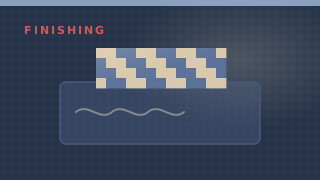
The cloth you cut off the loom is not the cloth you will use. It is stiff, tight and slightly wiry, with the weave visible as a grid. Finishing relaxes the fibres, closes the weave and gives the cloth its final hand — and it shrinks the piece, sometimes by a quarter.
Why finishing changes the cloth
Yarn on the loom is under tension and slightly stretched. When it gets wet, the fibres relax and swell, the crimp returns, and the yarn thickens and shortens. Thicker yarn in the same sett means the cloth closes up; shorter yarn means the piece shrinks. That is the whole mechanism.
Wool goes further than the others because of its scales. Agitate wet wool and the scales catch on each other and migrate, locking the fibres together. That is fulling, and it is how a loose wool cloth becomes a dense, windproof one.
Washing and fulling, by fibre
| Fibre | Water | Agitation | Shrinkage |
|---|---|---|---|
| Wool | Warm, pH neutral | Gentle to firm to full | 10–25 % |
| Cotton | Hot | Moderate | 5–10 % |
| Linen | Hot | Firm | 8–15 % |
| Silk | Cool, pH neutral | Very gentle | 3–6 % |
| Alpaca | Warm, pH neutral | Gentle | 5–12 % |
Wool and temperature shock
Moving wool between hot and cold water, or agitating it hard, will felt it whether you wanted to or not. If you want a soft wool cloth, keep the water warm and the handling gentle. If you want a fulled one, do it deliberately and watch it.
A finishing routine
Secure the ends
Zigzag or overlock the raw ends before the first wash, or they will fray into a mess.
Soak, do not scrub
Warm water with a little pH-neutral soap, ten to twenty minutes. No wringing.
Rinse at the same temperature
Temperature changes shock wool. Keep the rinse water the same as the wash.
Roll, do not wring
Roll the cloth in a towel and press the water out. Never twist it.
Dry flat, then press
Dry flat and square, then press with steam while slightly damp.
Wash it twice more
Linen and cotton keep softening for two or three washes. Judge the hand after the third.
Planning for shrinkage
Do not discover shrinkage — plan it. Weave a test sample, cut it, measure it, wash it, measure it again, and calculate the percentage in both directions. Then gross up your planned dimensions before you warp. The Warp & Weft Calculator has a take-up and shrinkage allowance field for exactly this.
Keep the sample. Staple it in a notebook with the figures written next to it. After a few projects you will know your own shrinkage numbers by fibre, and your planning will stop being guesswork.
Pressing and the final hand
Press woven cloth with steam while it is still slightly damp, using a pressing cloth for wool and silk. Do not iron flat — press, lift, move, press. Linen and cotton benefit from a hard press; wool and alpaca should be pressed lightly so the cloth keeps its loft.
Hang the finished cloth for a day before you judge it. Cloth relaxes as it hangs, and a piece that looks tight on the ironing board often looks exactly right the next morning.