Patterns & Drafts
Sample notebook
The record that makes weaving repeatable
Specifications
| Format | Ring binder or sewn notebook |
|---|---|
| Per sample | Swatch, draft, yarn, sett, finish notes |
| Swatch size | 8 × 8 cm minimum |
| Also record | Shrinkage before and after washing |
| Level | All |
| Value | Highest of any studio tool |
Technical parameters
| Record | Yarn, count, sett, reed, weave, finish |
|---|---|
| Measure | Width and length before and after finishing |
| Attach | Swatch with thread or staple |
| Review | Before every new warp |
| Best for | Making your own results repeatable |
Overview
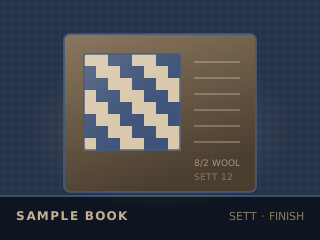
A sample notebook holds a cut square of every cloth you weave, stapled next to the draft, the yarn, the sett, the finish and what you thought of it. It is the single most useful object in a weaver’s studio, because it is the only place your own results are recorded.
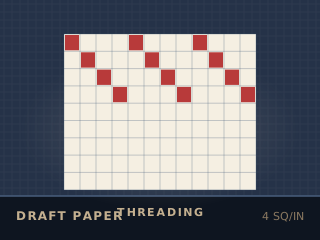
Typical figure for this stage: 4 – 16 shafts. Lift the right shafts in the right order. The draft is the pattern; the loom just follows it.
Safety notes
Keep the notebook away from the dye area so it does not become a record of chemical spills. If you staple swatches, mind your fingers, and keep sharp scissors and pins out of the reach of children.
Using it well
- Cut the swatch before you wash the cloth, and cut a second one after. The difference is the shrinkage.
- Write the sett down even when you are sure you will remember. You will not.
- Note the failures as carefully as the successes — that is where the information is.
- Ten years of samples is worth more than any book, because it is about your yarn and your loom.
Works with
Practise it in 3D
Run this stage as an interactive simulation, with the same figures this page quotes.
Open the simulatorRelated