Patterns & Drafts
Weaving calculator
Pocket reference for sett, ends and yarn
Specifications
| Form | Pocket calculator, card or slide rule |
|---|---|
| Functions | EPI, total ends, warp length, yarn mass |
| Reference tables | Typical sett by fibre and weave |
| Waste allowance | 40 – 60 cm per warp |
| Yarn allowance | 10 – 15 % for take-up and waste |
| Level | All |
Technical parameters
| Sett | Reed dent × ends per dent |
|---|---|
| Total ends | EPI × width in inches |
| Warp length | Finished length + shrinkage + waste |
| Yarn mass | Length ÷ count, with allowance |
| Best for | Planning any warp |
| See also | The three calculators on this site |
Overview
A pocket calculator or slide-rule style reference for the arithmetic a warp needs: ends per inch from the reed, total ends from the width, warp length with waste, and yarn quantity with allowance. Many weavers keep the numbers on a card taped to the loom.
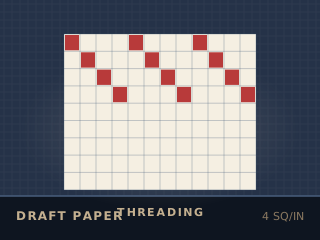
Typical figure for this stage: 4 – 16 shafts. Lift the right shafts in the right order. The draft is the pattern; the loom just follows it.
Safety notes
Arithmetic is not a safety matter, but a wrong sett is: a warp set too densely will abrade, shed badly and snap ends under tension, and a snapped warp end can flick back at your face. Check the sett against the fibre before you wind.
Using it well
- Write the numbers on the loom before you warp: total ends, sett, warp length, reed used.
- Add 40 – 60 cm of loom waste to every warp, more for a big floor loom.
- Add 10 – 15 % to yarn quantities for take-up, and buy one extra skein of a dyed yarn.
- This site’s three calculators do the same sums with the working shown.
Practise it in 3D
Run this stage as an interactive simulation, with the same figures this page quotes.
Open the simulatorRelated