Weaving Tools
Reed
Sets the warp spacing and beats the weft
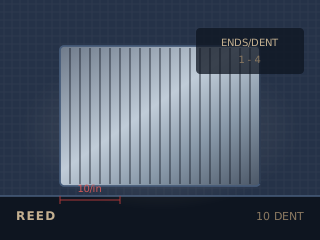
Specifications
| Dent (dpi) | 4 – 24 dents per inch |
|---|---|
| Width | 30 – 160 cm |
| Materials | Stainless steel in a wooden or metal frame |
| Ends per dent | 1 – 4 |
| Depth | 5 – 8 cm |
| Finish | Polished, burr-free |
Technical parameters
| Sett formula | Reed dent × ends per dent = EPI |
|---|---|
| Compatibility | Must match loom width |
| Care | Never use metal tools to clean |
| Best for | Setting warp spacing and beating |
| Wear | Rust and burrs are the enemies |
Overview
The reed is the comb the warp passes through on its way to the cloth. Its dent spacing sets the warp ends per inch, and its face is what the beater pushes against to pack each pick. Reed number, width and condition together decide whether your sett is achievable.
Typical figure for this stage: 40 – 70 ppi. Open the shed, pass the weft, beat it home. Rhythm and consistent beat make an even cloth.
Safety notes
Reed dents are fine and sharp at the edges. Handle the reed by its frame, not by the dents, and never run a finger along the comb. Bent dents catch yarn and can snap a warp end into your face. Keep reeds away from rust-causing damp and out of reach of children.
Using it well
- Sett is reed dent multiplied by ends per dent: a 10-dent reed with 2 ends per dent gives 20 EPI.
- Clean the reed with a soft brush and warm soapy water only — a metal tool will bend a dent and you will never get it straight.
- Store a reed flat and dry; rust in the dents will fray every warp you thread.
- If your sett needs a fractional dent, thread two ends in some dents and one in others.
Works with
Practise it in 3D
Run this stage as an interactive simulation, with the same figures this page quotes.
Open the simulator