Looms & Frames
Table loom
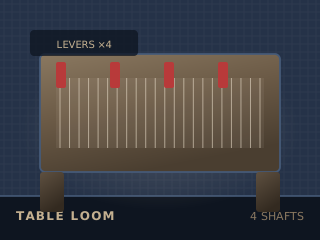
Compact loom with hand-levered shafts
Lock the brake firstNever cut a tensioned warpMask up for dusty fibreVentilate the dye areaTie back hair · check heddles · ventilate
Specifications
| Typical weaving width | 25 – 60 cm |
|---|---|
| Shafts (harnesses) | 4 – 8 |
| Treadles | None — lever operated |
| Weight | 3 – 9 kg |
| Folding | Legs often fold |
| Floor space | A table edge |
Technical parameters
| Shed mechanism | Hand lever, one per shaft |
|---|---|
| Warp tension | Ratchet and pawl, front and back |
| Beater | Sliding or hinged |
| Materials | Beech, ash or ply |
| Best for | Sampling, scarves, narrow cloth, teaching |
2Weave25 – 160 cm
Overview
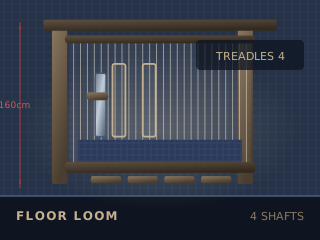
A table loom changes sheds with levers rather than treadles, so one hand leaves the shuttle for every pick. It is slower than a floor loom but small, portable, quiet, and much cheaper — the usual choice for a first multi-shaft loom or for sampling.
Typical figure for this stage: 40 – 70 ppi. Open the shed, pass the weft, beat it home. Rhythm and consistent beat make an even cloth.
Safety notes
Table looms are light and can tip if you lean on the beater — clamp or weight the frame. Keep the levers clear of loose clothing. As with any loom, lock the tension before reaching into the shed.
Using it well
- Clamp it down or hold it still — a table loom that walks across the table ruins your selvedges.
- Because one hand leaves the shuttle, practise throwing and catching in one motion before you judge your speed.
- Great for sampling: same warp, three setts, ten centimetres each.
- Lever looms teach you the draft properly, because you feel every shaft lift.
Works with
Practise it in 3D
Run this stage as an interactive simulation, with the same figures this page quotes.
Open the simulatorEducational reference. Specifications are typical published ranges for this class of equipment or material, not a specification for any one product. Always follow the manufacturer’s instructions and local rules. Nothing here is a guarantee of cloth, colour or result.