Looms & Frames
Rigid heddle loom
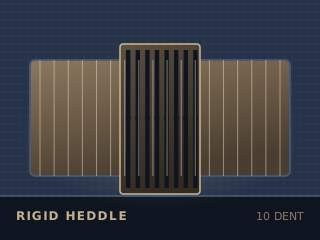
One-piece heddle that sets the sett for you
Specifications
| Typical weaving width | 25 – 80 cm |
|---|---|
| Heddle dent (dpi) | 5, 7.5, 10, 12.5 |
| Shafts | 1 rigid heddle (2 positions) |
| Weight | 2 – 7 kg |
| Setup time | 20 – 40 minutes |
| Folding | Most models fold flat |
Technical parameters
| Shed mechanism | Direct — heddle up / heddle down |
|---|---|
| Warp tension | Ratchet and pawl |
| Second heddle | Optional, adds a third shed |
| Materials | Beech or birch ply |
| Best for | Plain weave, scarves, towels, pick-up patterns |
Overview
A rigid heddle is a single slotted reed-and-heddle combined: alternate warp ends pass through slots and holes, so one lift makes a plain-weave shed. There are no separate shafts and no threading errors, which makes this the fastest loom to learn — and a genuinely capable one for plain weave and simple pick-up patterns.
Typical figure for this stage: 40 – 70 ppi. Open the shed, pass the weft, beat it home. Rhythm and consistent beat make an even cloth.
Safety notes
The heddle is under tension when the loom is warped. Release the ratchet before removing or re-seating a heddle, and keep fingers out of the slot line while the warp is tight. Splinters from cheap ply frames are common — sand the heddle edges.
Using it well
- Match the heddle dent to the yarn: too fine and the warp rubs, too coarse and the cloth is sleazy.
- A second heddle roughly doubles the pattern vocabulary for very little money.
- Direct tension means the shed closes as you advance — advance often.
- Warp it front to back the first few times; it is far more forgiving of counting errors.
Practise it in 3D
Run this stage as an interactive simulation, with the same figures this page quotes.
Open the simulator