Fibers & Yarns
Wool yarn
Elastic, warm and forgiving
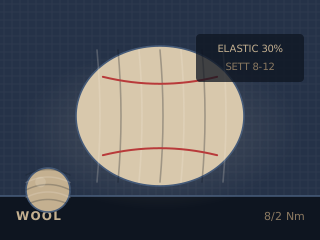
Specifications
| Count | 2 – 20 Nm (worsted) |
|---|---|
| Staple length | 5 – 15 cm |
| Elasticity | High — 25 – 35 % at break |
| Sett (plain weave) | 8 – 12 EPI |
| Shrinkage (fulled) | 10 – 25 % |
| Dye affinity | Excellent |
Technical parameters
| Fiber diameter | 18 – 40 µm |
|---|---|
| Strength (dry) | Moderate |
| Handling | Warm, slightly grippy |
| Best weaves | Plain, twill, herringbone, tapestry |
| Care | Hand wash cool, dry flat |
Overview
Wool is the weaver’s friend: it has crimp, so it stretches under tension and springs back, which hides an uneven beat. It fulls and blooms in the finish, filling the gaps between ends. Wool takes dye easily and comes in an enormous range of counts and preparations.
Typical figure for this stage: 8 – 20 N tension. Measure, wind, thread and tension the warp. Most weaving problems are warp problems.
Safety notes
Wool dust and fine fibre can irritate airways — ventilate when winding and avoid dry-sweeping the studio. Some people react to lanolin or to the mordants used on dyed wool; wash new yarn before wearing. Moth treatments are pesticides: follow the label exactly and keep them away from food and children.
Using it well
- Wool is the best first warp because it forgives uneven tension and abrades less than cotton.
- A fulled wool cloth is windproof and dense — plan the shrinkage in before you weave, not after.
- Blends behave between their two fibres; a 50/50 wool-linen is a good summer cloth.
- Store wool with protection: moths eat protein fibres and they find clean cloth.
Practise it in 3D
Run this stage as an interactive simulation, with the same figures this page quotes.
Open the simulator