Fibers & Yarns
Cotton yarn
Strong, inelastic and predictable
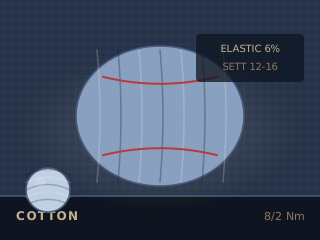
Specifications
| Count | 4 – 20 Nm |
|---|---|
| Staple length | 2 – 3 cm |
| Elasticity | Low — 5 – 8 % at break |
| Sett (plain weave) | 12 – 16 EPI |
| Shrinkage | 5 – 10 % |
| Dye affinity | Good, needs a mordant for natural dyes |
Technical parameters
| Fiber diameter | 12 – 20 µm |
|---|---|
| Strength (dry / wet) | High / higher |
| Handling | Smooth, cool, firm |
| Best weaves | Plain, rib, huck, lace |
| Care | Machine wash warm, tumble low |
Overview
Cotton has almost no stretch, which makes it wonderfully predictable and unforgiving in equal measure: an uneven beat shows. It is strong when wet, takes dye in clear bright shades, and gives a firm, cool cloth — the fibre behind tea towels, table linen and most beginner samplers.
Typical figure for this stage: 8 – 20 N tension. Measure, wind, thread and tension the warp. Most weaving problems are warp problems.
Safety notes
Cotton dust is a respiratory irritant, especially when you are winding or tearing. Work in a ventilated space and wear a dust mask if you are handling large quantities. Cotton lint is highly flammable — keep it away from heaters and dye pots. Wet cotton is heavy: lift full warps with care.
Using it well
- Because cotton does not stretch, tension it firmly and keep it firm — a slack cotton warp will not recover.
- Mercerised cotton has a sheen and takes dye more evenly than unmercerised.
- Cotton is the right choice for anything that will be washed hard.
- Slub and unmercerised cottons add texture without changing the sett much.
Practise it in 3D
Run this stage as an interactive simulation, with the same figures this page quotes.
Open the simulator