Weaving Tools
Shuttle
Carries the weft through the shed
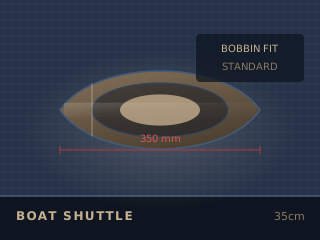
Specifications
| Type | Boat, stick, end-feed, rug |
|---|---|
| Length | 20 – 45 cm |
| Materials | Maple, ash, bamboo, plastic |
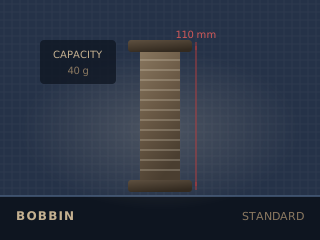
| Capacity | Bobbin or pirn |
| Best width | Match to loom width |
| Finish | Waxed, sealed |
Technical parameters
| Weight | 30 – 200 g |
|---|---|
| Bobbins | Standard or jumbo |
| Yarn tension | Controlled (end-feed) or free |
| Best for | Any weft-faced or plain-weave work |
| Maintenance | Wax the runners |
Overview
A shuttle holds a bobbin or a pirn of weft and carries it across the warp. Boat shuttles roll along the race and suit wide, fast weaving; stick shuttles are flat and simple and are the right choice for narrow or rigid-heddle work; end-feed shuttles tension the yarn as it unwinds.
Typical figure for this stage: 40 – 70 ppi. Open the shed, pass the weft, beat it home. Rhythm and consistent beat make an even cloth.
Safety notes
A dropped or thrown shuttle is a genuine hazard: a boat shuttle can travel several metres. Never throw a shuttle toward another person, and keep the flight path clear. Splinters from unsealed wooden shuttles are common — sand and wax them. Watch your fingers at the reed race when catching.
Using it well
- Match shuttle length to loom width: too short and you reach, too long and it is unwieldy.
- A well-waxed boat shuttle should glide on the race with a flick of the wrist, not a shove.
- Keep two shuttles for two colours and you can weave without stopping to rewind.
- Never overfill a bobbin — the yarn will jam between bobbin and shuttle wall.
Practise it in 3D
Run this stage as an interactive simulation, with the same figures this page quotes.
Open the simulator