Fibers & Yarns
Silk yarn
Strong, lustrous and expensive
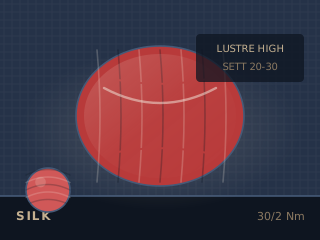
Specifications
| Count | 20 – 60 Nm (fine) |
|---|---|
| Filament length | Continuous (up to 900 m) |
| Elasticity | Moderate — 15 – 20 % at break |
| Sett (plain weave) | 20 – 30 EPI |
| Shrinkage | 3 – 6 % |
| Dye affinity | Excellent |
Technical parameters
| Fiber diameter | 10 – 14 µm |
|---|---|
| Strength (dry / wet) | Very high / slightly lower |
| Handling | Smooth, slippery, cool |
| Best weaves | Satin, plain, crepe |
| Care | Hand wash cool or dry clean |
Overview
Silk is the strongest natural fibre for its weight, with a triangular cross-section that throws light back as sheen. It has good elasticity, takes brilliant dye, and drapes beautifully. It is also the most expensive yarn most weavers will ever put on a loom.
Typical figure for this stage: 8 – 20 N tension. Measure, wind, thread and tension the warp. Most weaving problems are warp problems.
Safety notes
Silk is slippery and fine, so keep it away from moving machinery where it can be drawn in. Some silk is degummed with alkaline baths; rinse well if you are handling it wet for long periods. Sericin dust affects sensitive skin — wear gloves if you react.
Using it well
- Silk is slippery: use a tighter sett and a smoother reed than the count alone suggests.
- Fine silk needs fine heddles — a rough wire heddle will abrade the filament.
- Silk takes natural dye brilliantly; cochineal on silk gives a red that nothing else matches.
- Save offcuts. At silk prices you will want them.
Works with
Practise it in 3D
Run this stage as an interactive simulation, with the same figures this page quotes.
Open the simulator