Patterns & Drafts
Pick-up stick
Selects warp ends by hand for pattern
Lock the brake firstNever cut a tensioned warpMask up for dusty fibreVentilate the dye areaTie back hair · check heddles · ventilate
Specifications
| Type | Flat stick, often with a bevel |
|---|---|
| Length | 40 – 90 cm |
| Materials | Beech, maple or bamboo |
| Thickness | 3 – 8 mm |
| Use | Rigid heddle and tapestry |
| Quantity | Two or more for complex patterns |
Technical parameters
| Sheds added | One per stick |
|---|---|
| Pattern type | Floats, lace, inlay, simple motifs |
| Edge | Rounded and waxed |
| Best for | Rigid heddle, tapestry, band weaving |
| Maintenance | Wax lightly |
3Pattern4 – 16 shafts
Overview
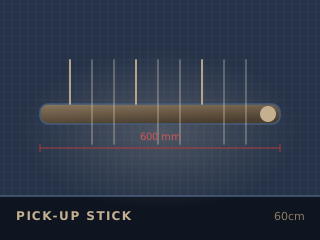
A pick-up stick is a flat stick slid under selected warp ends so they lift together on the next pick. On a rigid-heddle loom it is how you get a third shed, and how you weave simple lace, floats and inlay patterns without a multi-shaft loom.
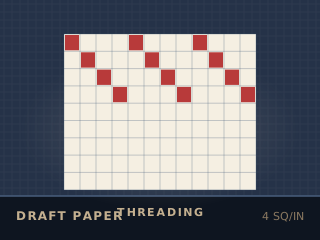
Typical figure for this stage: 4 – 16 shafts. Lift the right shafts in the right order. The draft is the pattern; the loom just follows it.
Safety notes
A long flat stick in a tensioned warp can spring out of the shed. Slide it in slowly, keep your face clear, and hold the warp ends down with your other hand. Round and wax the edges so it does not abrade the warp.
Using it well
- Mark the stick so you know which end is which — you will pick up in the same direction every time.
- Keep the picked-up ends under even tension or the pattern will wander.
- Two sticks and a heddle give you four sheds, which is a surprising amount of pattern.
- Write the pick-up sequence down as you go, or you will not be able to repeat it.
Practise it in 3D
Run this stage as an interactive simulation, with the same figures this page quotes.
Open the simulatorEducational reference. Specifications are typical published ranges for this class of equipment or material, not a specification for any one product. Always follow the manufacturer’s instructions and local rules. Nothing here is a guarantee of cloth, colour or result.
Related